
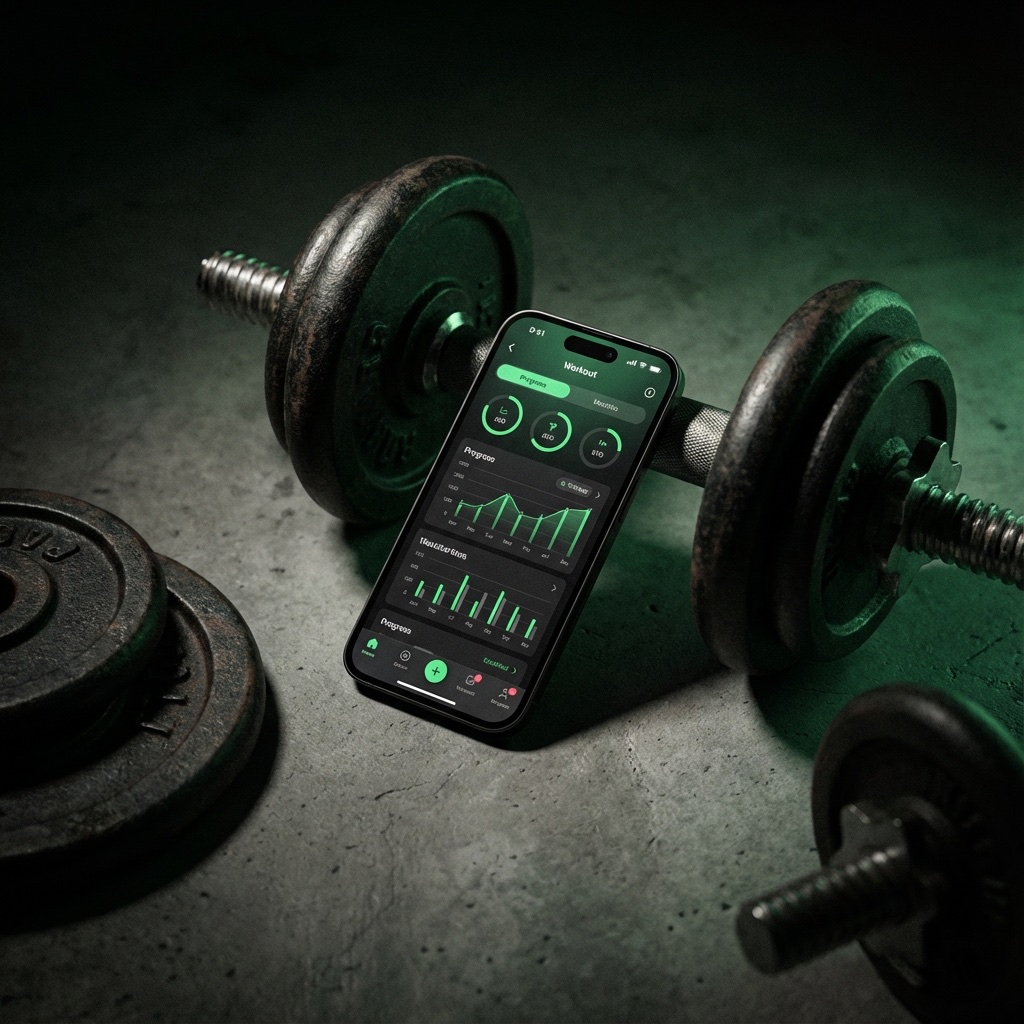
If you've ever wondered why some lifters seem to make consistent gains while others spin their wheels, the difference often comes down to tracking. A workout tracker app isn't just a digital notebook—it's the foundation of progressive overload, the single most important principle for building muscle and strength.
The Science: Why Data Drives Muscle Growth
Hypertrophy (muscle growth) requires progressive mechanical tension over time. Without tracking, you're guessing. Research consistently shows that lifters who track their workouts make faster strength gains than those who train by feel alone. A gym log ensures you know exactly what weight, reps, and sets you hit last session—so you can beat them.
Key Metrics to Track
- Weight × Reps × Sets — Total training volume is the primary driver of hypertrophy.
- Personal Records (PRs) — 1RM tracking shows objective strength progression over months.
- Rest Periods — Consistency in rest times ensures comparable session-to-session data.
- RPE/RIR — Rate of Perceived Exertion helps you autoregulate intensity intelligently.
How a Workout Tracker Makes Overload Automatic
The best progressive overload trackers show your last session's numbers right when you need them: as you're about to start a set. No flipping through notebooks, no memory games. You see "185 lbs × 8 reps" and you know your target is 185 × 9 or 190 × 8. This removes friction and makes progressive overload nearly automatic.
Beyond the Numbers: Building Accountability
Tracking creates accountability. When you see two weeks without a PR, it prompts honest self-assessment: Is my sleep off? Am I eating enough? Did I skip the difficult exercises? This feedback loop accelerates learning about your body's response to training.
Read more: How Much Volume is Enough? | Hypertrophy Training 101
Start tracking with Gainz Pro — see your progress clearly →