
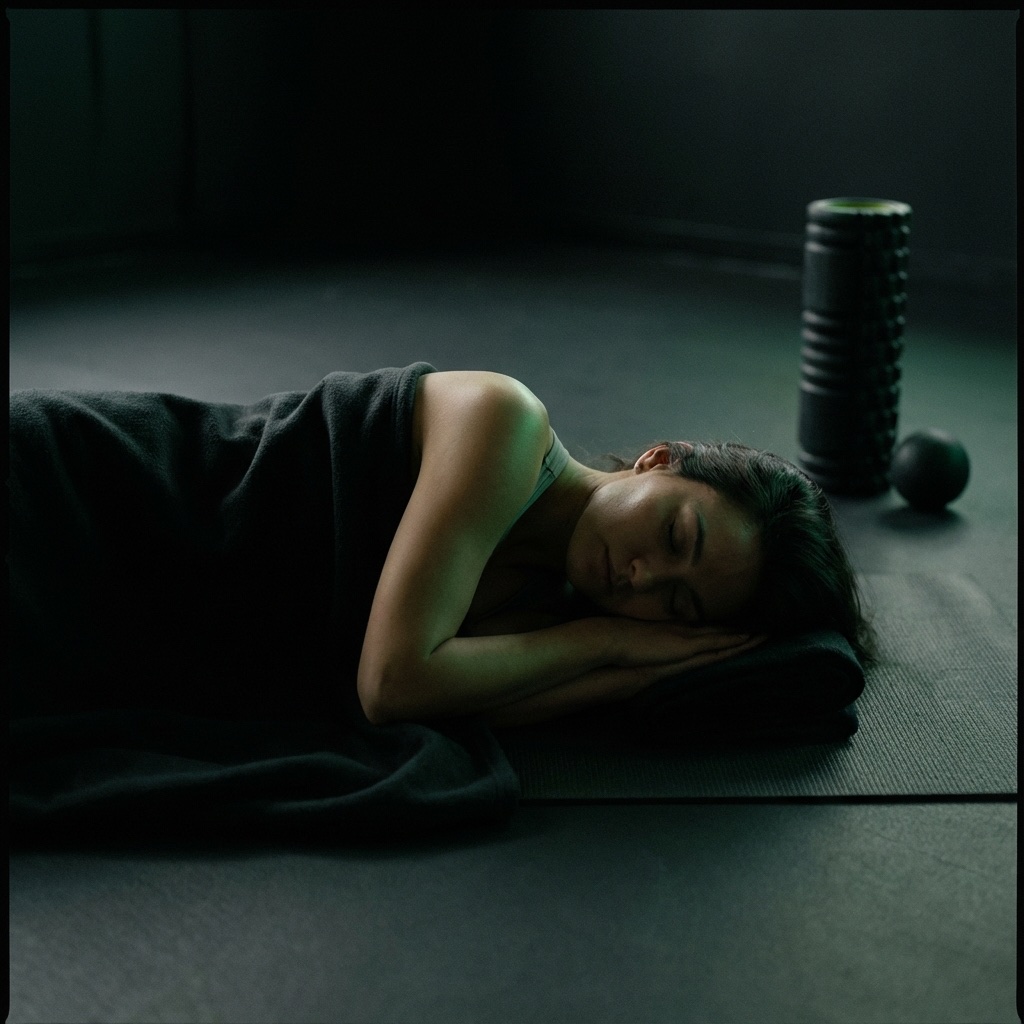
You just crushed a heavy squat session. Now Instagram says you need a $200 percussion gun, a cryotherapy chamber, and seven supplements to recover. Here's the truth: you need sleep, food, and time. Everything else is minor at best.
Recovery is where adaptation actually happens. Training provides the stimulus; recovery turns that stimulus into muscle and strength. Yet most lifters obsess over programming details while sleeping 5 hours and eating like college students.
This guide ranks recovery methods by actual effectiveness based on research—not supplement company marketing.
The Uncomfortable Truth About Recovery
Here's what the fitness industry doesn't want you to hear: the boring basics matter 10x more than any recovery gadget or supplement.
If you're sleeping 6 hours, no amount of foam rolling, cold plunges, or massage guns will compensate. Fix the fundamentals first. Then—and only then—consider the extras.
Sleep, nutrition, and stress management account for approximately 80% of your recovery capacity. Everything else—supplements, modalities, gadgets—fights over the remaining 20%. Master the basics before optimizing the margins.
Tier 1: The Non-Negotiables
These are the foundation. Without them, nothing else matters.
Sleep (7-9 Hours)
Sleep is the most powerful recovery tool you have. It's free, requires no equipment, and the research is overwhelming:
- Growth hormone peaks during deep sleep (stages 3-4)
- Testosterone production occurs primarily during sleep
- Muscle protein synthesis drops 18% after one night of poor sleep
- Cortisol increases 37% with sleep deprivation
- Injury risk increases significantly with chronic sleep debt
Practical tips: Consistent sleep/wake times matter more than total hours. Keep the room cold (65-68°F), dark, and quiet. Limit screens 1-2 hours before bed. Consider tracking sleep quality, not just duration.
Protein (1.6-2.2g/kg Body Weight)
Protein provides the building blocks for muscle repair and growth. Without adequate protein, training stimulus goes to waste.
- Total daily intake matters more than timing
- Spread across 3-5 meals (0.4-0.5g/kg per meal optimal)
- Post-workout window exists but is wider than bro-science suggests (several hours)
- Before bed protein supports overnight muscle protein synthesis
Adequate Calories
You can't recover in a severe deficit. Your body prioritizes survival over muscle growth. If you're cutting, accept that recovery will be compromised—and program accordingly with reduced volume.
Hydration
Dehydration impairs performance and recovery. Simple guideline: urine should be clear to light yellow. If it's consistently dark, drink more water.
Stress Management
Your body doesn't distinguish between training stress and life stress. A brutal week at work taxes the same recovery systems as heavy squats. During high-stress periods, reduce training load—you can't out-train chronic stress.
Tier 2: Actually Helpful (After Basics)
These have research support and provide meaningful benefit—once Tier 1 is handled.
Active Recovery
Light movement on rest days (walking, easy cycling, swimming) increases blood flow and may reduce soreness perception. Key word: light. This isn't another training session.
- 15-30 minutes of low-intensity movement
- Heart rate should stay below 120 bpm
- Should feel easy, not taxing
Creatine
The most researched supplement in existence. 3-5g daily supports ATP regeneration, may reduce muscle damage markers, and has secondary benefits for brain function and bone health.
Strategic Deloads
Planned recovery weeks every 4-8 weeks allow accumulated fatigue to dissipate while maintaining fitness. See our complete deload guide.
Tier 3: Maybe Works (Situationally Useful)
Evidence is mixed or benefits are context-dependent.
Foam Rolling/Self-Myofascial Release
Temporarily increases range of motion and may reduce soreness perception. Long-term structural benefits are unclear. Use it if it feels good, but don't expect miracles.
Massage
Feels great, may reduce perceived soreness, but research shows minimal effect on actual muscle recovery or performance. Worth it for relaxation and stress reduction—just don't expect faster gains.
Contrast Therapy (Hot/Cold)
Alternating hot and cold may increase blood flow. Evidence for recovery benefits is weak but not zero. Some athletes swear by it.
Compression Garments
May slightly reduce muscle swelling and perceived soreness. Effects are small but consistent across studies. Worth trying if you have them; not worth buying specifically for recovery.
Tier 4: Mostly Marketing
Limited evidence, overhyped benefits, or context-dependent at best.
Cold Therapy (Ice Baths, Cryotherapy)
This one is controversial. Cold exposure can reduce perceived soreness short-term. However, inflammation is part of the adaptation signal. Research shows cold exposure immediately after training may blunt hypertrophy.
For strength athletes: probably neutral to slightly negative for growth.
For athletes with multiple competitions: may help maintain performance between events.
Static Stretching
Doesn't reduce DOMS, doesn't prevent injury, doesn't speed recovery. If you enjoy it, fine. If you're stretching for recovery specifically, your time is better spent sleeping.
Most Supplements
Outside of creatine and protein (if diet is inadequate), evidence for recovery supplements is thin:
- BCAAs: Unnecessary if protein intake is adequate
- Glutamine: Body produces enough; supplementation doesn't help healthy people
- Most "recovery formulas": Overpriced, under-dosed blends of marginally useful ingredients
Percussion Massage Guns
Feel good. No evidence they improve recovery beyond regular massage. Useful for targeted self-massage; not a recovery game-changer.
| Recovery Method | Tier | Evidence | Recommendation |
|---|---|---|---|
| Sleep (7-9h) | 1 | Strong | Non-negotiable priority |
| Protein (1.6-2.2g/kg) | 1 | Strong | Essential for adaptation |
| Stress Management | 1 | Strong | Address or reduce training |
| Active Recovery | 2 | Moderate | Light movement helps |
| Creatine | 2 | Strong | Worth taking |
| Foam Rolling | 3 | Mixed | Use if it helps you |
| Cold Therapy | 4 | May hurt gains | Skip post-lifting |
| Static Stretching | 4 | Weak | Doesn't speed recovery |
Understanding DOMS
Delayed Onset Muscle Soreness (DOMS) is often misunderstood. Here's what you need to know:
DOMS Does NOT Indicate:
- A "good" workout
- Muscle growth stimulus
- That you trained hard enough
- That recovery is incomplete
DOMS DOES Indicate:
- Novel stress (new exercise, increased volume)
- Significant eccentric loading
- That your body encountered something unfamiliar
As you adapt to exercises, DOMS decreases even while gains continue. Chasing soreness means chasing novelty, which prevents progressive overload on proven movements.
Mild soreness is fine—and often improves during warm-up. If soreness significantly limits range of motion or drops strength more than 10%, take another rest day or train a different muscle group.
How Long Muscles Need to Recover
Recovery time varies by muscle group, training intensity, and individual factors:
| Muscle Group | Typical Recovery | Notes |
|---|---|---|
| Biceps/Triceps | 24-48 hours | Small muscles, recover quickly |
| Shoulders | 24-48 hours | Except after heavy pressing |
| Chest | 48-72 hours | Depends on pressing volume |
| Back | 48-72 hours | Large muscle group |
| Quads | 48-72 hours | Very fatiguing to train hard |
| Hamstrings | 48-72 hours | Especially after heavy hinges |
| CNS (after heavy compounds) | 48-96 hours | Systemic, not local |
Frequently Asked Questions
How long does it take for muscles to recover after a workout?
Most muscles recover within 48-72 hours. Smaller muscles (biceps, triceps) recover faster at 24-48 hours. Larger muscles (quads, back) may need 48-72 hours. Muscle protein synthesis peaks at 24-48 hours and returns to baseline within 72 hours regardless of soreness.
Does muscle soreness mean a good workout?
No. DOMS indicates novel stress or eccentric loading, not workout quality. You can have excellent workouts with no soreness. Chronic excessive soreness often indicates poor recovery or too much volume.
Should I train if I'm still sore?
Mild soreness is fine to train through—it often improves during warm-up. If soreness limits range of motion or significantly reduces strength, take another rest day or train a different muscle group.
Do ice baths help muscle recovery?
Cold exposure can reduce perceived soreness short-term but may blunt hypertrophy if used immediately post-training. Cold reduces inflammation, but inflammation is part of the adaptation signal. For muscle building, skip the ice bath after lifting.
How much sleep do I need for muscle recovery?
Aim for 7-9 hours of quality sleep. Growth hormone peaks during deep sleep. Sleep deprivation reduces muscle protein synthesis by up to 18% and increases cortisol by 37%. Sleep is the most effective recovery tool available.
References
- Dattilo M, et al. Sleep and muscle recovery: endocrinological and molecular basis for a new and promising hypothesis. Med Hypotheses. 2011;77(2):220-2. PubMed
- Mah CD, et al. The effects of sleep extension on the athletic performance of collegiate basketball players. Sleep. 2011;34(7):943-50. PubMed
- Morton RW, et al. A systematic review, meta-analysis and meta-regression of the effect of protein supplementation on resistance training-induced gains. Br J Sports Med. 2018;52(6):376-384. PubMed
- Dupuy O, et al. An Evidence-Based Approach for Choosing Post-exercise Recovery Techniques. Front Physiol. 2018;9:403. PubMed
- VanHeest JL, et al. Ovarian suppression impairs sport performance in junior elite female swimmers. Med Sci Sports Exerc. 2014;46(1):156-66. PubMed
- Peake JM, et al. Recovery of the immune system after exercise. J Appl Physiol. 2017;122(5):1077-1087. PubMed
Track Recovery Alongside Training
Gainz Pro lets you log sleep quality, soreness, and energy levels. Spot patterns between recovery and performance over time.
Join the Waitlist →