
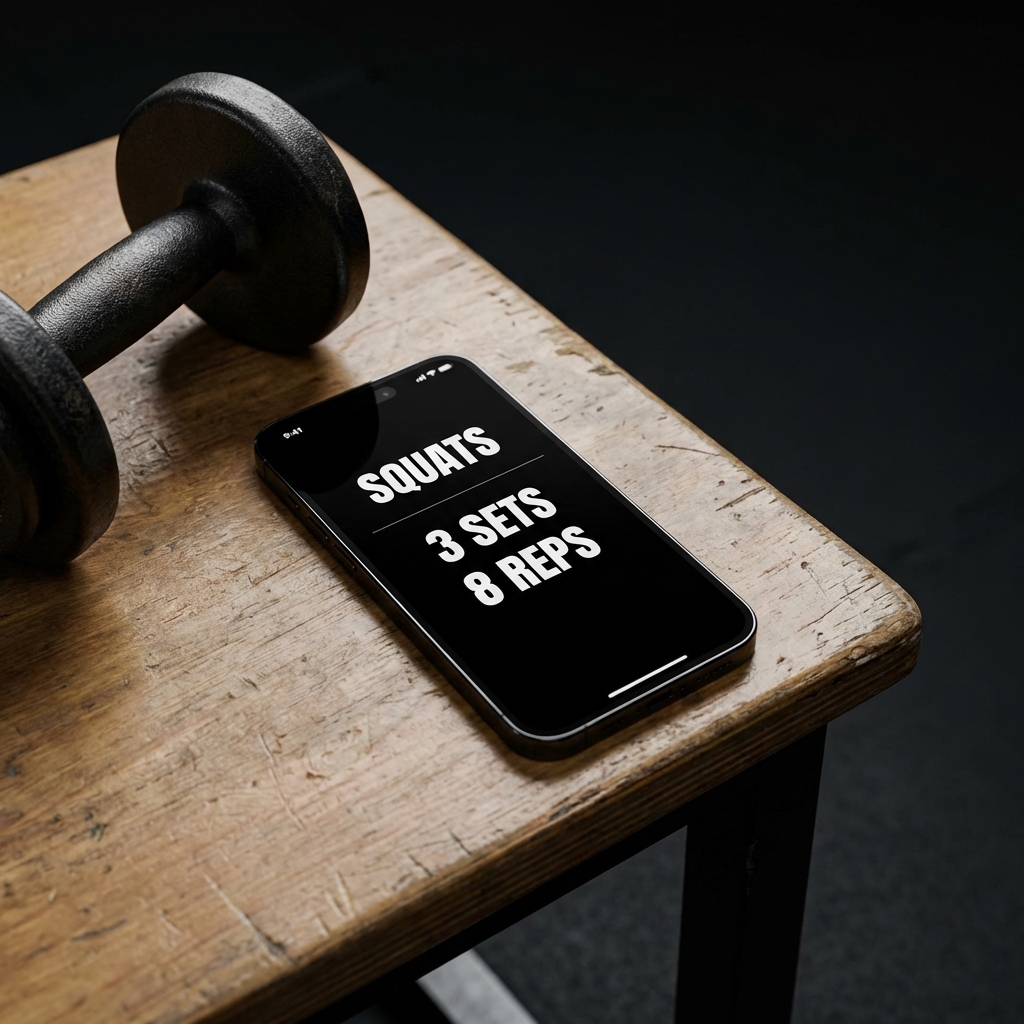
The Problem with Modern Fitness Apps
Open the App Store and search for "workout tracker." You'll find hundreds of apps promising to be your AI coach, your nutritionist, and your social network all in one.
But when you're under a heavy barbell, you don't need a social feed. You don't need a 3D avatar of a muscle. You need to know: "What did I lift last time, and can I beat it today?"
Feature bloat introduces friction. Every extra second spent navigating menus is a second your focus drifts away from the lift.
Why Simple Wins
Minimalism in design isn't just about looking clean. It's about removing everything that doesn't support the primary goal. In the gym, the primary goal is Progressive Overload.
1. Instant Recall
A simple tracker shows your history immediately. No digging. You see 225lbs x 5 reps last week, so you know today the goal is 225lbs x 6 or 230lbs x 5.
2. Zero Lag
Complex apps chew through battery and data. A lightweight, simple tracker works instantly, even in the dead zone of a basement gym.
3. Reduced Mental Load
Decision fatigue is real. If your app asks you to rate your mood, tag your friends, and upload a photo after every workout, it drains the mental energy you need for lifting.
The Only Features You Actually Need
If you strip away the marketing fluff, a serious lifter only needs three things from an app:
- The Log: Sets, Reps, Weight, RPE.
- The History: What you did last time.
- The Timer: A simple rest timer that starts automatically.
That's it. Everything else is secondary.
Enter Gainz Pro
We built Gainz Pro because we were tired of bloated apps. We wanted a digital notebook that did the math for us but stayed out of the way.
It’s a simple workout tracker at its core, but with powerful analytics running silently in the background. You log your numbers, we track the volume, frequency, and 1RM trends. You focus on lifting; we handle the data.