
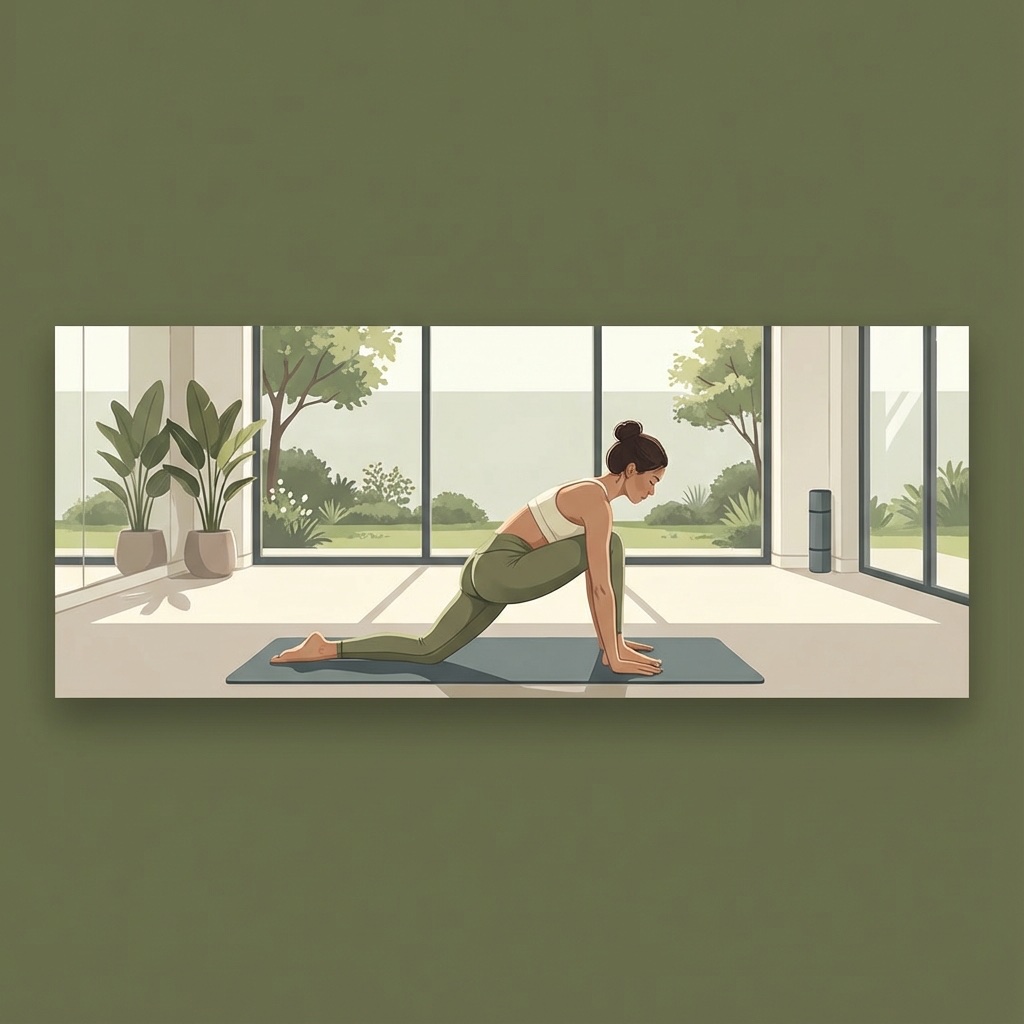
Active Recovery: Stretching, Mobility Work, and Light Cardio
Active recovery means deliberately easy movement between demanding sessions. Its job is simple: help you feel less stiff, maintain a normal activity rhythm, and arrive at the next workout ready to train. It should create almost no additional fatigue. If your “recovery” session needs a warm-up, a playlist, and a post-workout shake, it has probably become another workout.
What active recovery can—and cannot—do
Light movement may feel good and can increase local blood flow while you are doing it. However, the research does not justify promising faster muscle repair or guaranteed soreness relief. A broad review of active cool-downs found little consistent improvement in soreness, muscle-damage markers, or later performance, although some people may still prefer an easy cool-down. A small study in resistance-trained men found that very light bench sessions accelerated strength and power recovery after an unusually high-volume bench workout, but did not reduce soreness. That result is useful, not universal.
Stretching deserves the same clear framing. It can be useful for flexibility practice or for restoring a position that feels restricted, but a meta-analysis of randomized trials found that post-exercise stretching did not meaningfully improve soreness or strength recovery compared with passive recovery or other methods. Choose it because it helps you move comfortably—not because you expect it to erase yesterday’s training stress.
A simple active-recovery protocol
1. Pick one easy aerobic option
- Walk: 15–30 minutes on flat ground.
- Bike or row: 10–20 minutes with very light resistance.
- Pool: easy swimming or water walking, provided the strokes feel effortless.
Keep the effort around 2–3 out of 10. You should breathe comfortably, speak in full sentences, and finish with no leg or arm burn. Pace and duration are ceilings, not targets: five minutes is enough if that is all that improves how you feel.
2. Add mobility only where it is useful
Choose two or three movements that match the positions you need in your next session. For example, after a squat day you might use ankle rocks, controlled hip rotations, and a light bodyweight squat to a comfortable depth. Perform one or two unhurried sets of 5–8 repetitions. Mobility work should explore a tolerable range, not force one.
3. Use stretching for comfort or flexibility
If a muscle feels short or a position is limited, try one or two relaxed holds of roughly 20–30 seconds. Keep the sensation mild. Aggressive stretching of a very sore muscle can add discomfort without improving recovery. You can also skip stretching entirely when normal, controlled movement already restores the range you need.
Example: the day after a hard lower-body session
- 10-minute easy walk while checking whether stiffness improves.
- 1 set each of 6 ankle rocks, 6 controlled hip rotations per side, and 8 unweighted squats.
- Optional 5–10 more minutes of walking if you feel progressively better.
- Finish. Do not add intervals, loaded carries, sled sprints, or a “quick” leg circuit.
The decision rule is more important than the exercise list: continue only while the session feels restorative. If soreness increases, technique changes, or the activity starts competing with tomorrow’s workout, reduce it or stop.
How active recovery fits your training week
Place it on a rest day or immediately after training as a short cool-down. Do not use it to compensate for a poorly managed program. Sleep, adequate food and fluids, sensible weekly volume, and enough time between hard sessions remain the foundations. Track whether the next workout actually improves. If performance repeatedly drops after a “recovery” day, lower its duration or remove it.
For lifters, specificity can be useful in very small doses: empty-bar technique work or a few unloaded movement rehearsals may reduce stiffness and keep a pattern familiar. Keep these far from failure and well below normal work-set volume. Active recovery should never disguise additional hypertrophy or conditioning work.
When rest is the better choice
Choose passive rest when you are unusually exhausted, ill, sleep-deprived, or when easy movement makes symptoms worse. Sharp pain, marked swelling, loss of normal function, dizziness, or symptoms that persist or escalate are not ordinary training soreness; stop training and seek appropriate medical assessment. Active recovery is not rehabilitation and this guide cannot diagnose an injury.
Evidence and limitations
Recovery research uses different sports, protocols, and outcomes, so a method that changes perceived soreness may not restore force production—and vice versa. Most studies are short, samples are often small, and individual preference matters. Treat active recovery as a low-cost experiment: standardize the dose, log how you feel and perform, and keep it only if it improves your next training decision.
- Van Hooren & Peake: active cool-down effects on recovery and adaptation
- Afonso et al.: post-exercise stretching and recovery meta-analysis
- Bartolomei et al.: light upper-body active recovery after high-volume bench press
Make your next workout count.
Log sets fast, track progressive overload, and know what to beat next.
iOS 17+ · Offline workout logging