
The App Should Not Become the Workout
The idea for Gainz started with an ordinary problem: I kept forgetting the weights I had used. I wanted a clean record, but many workout apps made a simple set feel like data entry. More screens, more taps, more decisions—and a phone in my hand for longer than I wanted.
A notebook solves that surprisingly well. Write the exercise, weight, and reps. Done. So any digital workout logger has to beat that baseline. It should keep paper's speed while adding the things paper cannot: instant history, previous results, rest timing, corrections, progress views, and backup.
That leads to one ruthless product test: can you log a normal set in five seconds without breaking focus?
How to Run the Test
Use a real workout, not a polished demo. For the first three exercises, time the moments that usually create friction:
- Start: how long does it take to reach the first working set?
- Recall: can you see what you did last time before choosing today's weight?
- Log: can you enter weight and reps, then start resting, in about five seconds?
- Correct: can you fix a mistyped number without rebuilding the set?
- Continue: does the tracker still work when reception is poor?
Do not award points for features you never use. A giant exercise library, social feed, or elaborate analytics screen cannot compensate for slow logging during the session.
Paper Is the Speed Benchmark
Paper has almost no interface. It never signs you out, loads a paywall between sets, or asks you to organize the workout before recording it. Its weakness is everything that happens later: finding an old result, spotting a trend, copying a routine, or recovering a lost notebook.
A good app should win that trade:
- During training: as fast and dependable as paper
- Before a set: faster at showing what happened last time
- After training: better at turning raw sets into useful history
If the app only becomes valuable after you spend the workout feeding it, the cost is too high.
Six Signs Your Tracker Has Too Much Friction
- You regularly postpone logging until the end of the workout.
- You need several screens to change a weight or rep count.
- Your previous result is hidden behind a history tab.
- A weak connection blocks or delays the workout.
- You keep separate notes because the app is too rigid.
- You spend more time configuring dashboards than using the information.
Missing logs are often treated as a discipline problem. Sometimes they are a design problem. If the same tiny interruption repeats for every set, even motivated lifters eventually skip it.
Where a Watch Actually Helps
A watch is useful when it removes phone interactions, not when it shrinks the same complicated interface onto a smaller screen. The valuable moments are narrow: confirm a set, see the active rest timer, check the next target, and keep the workout moving.
Automatic behavior should also stay predictable. When the app can infer the next step safely, it should reduce taps. When it cannot, the manual action should remain obvious and fast. Automation that creates doubt is just another form of friction.
The One-Workout Decision
After one normal session, ask five questions:
- Did I log every working set?
- Did I know what result I was trying to beat?
- Did the tracker interrupt my focus?
- Could I fix mistakes immediately?
- Will this record make the next workout easier?
If the first, second, and fifth answers are yes—and the third is no—the tracker is doing its job. Everything else is secondary.
The Bottom Line
The best workout logger is not the one with the longest feature list. It is the one you can trust, complete, and forget about while you train. Five seconds is not a laboratory standard; it is a useful constraint. It forces the product to respect the workout.
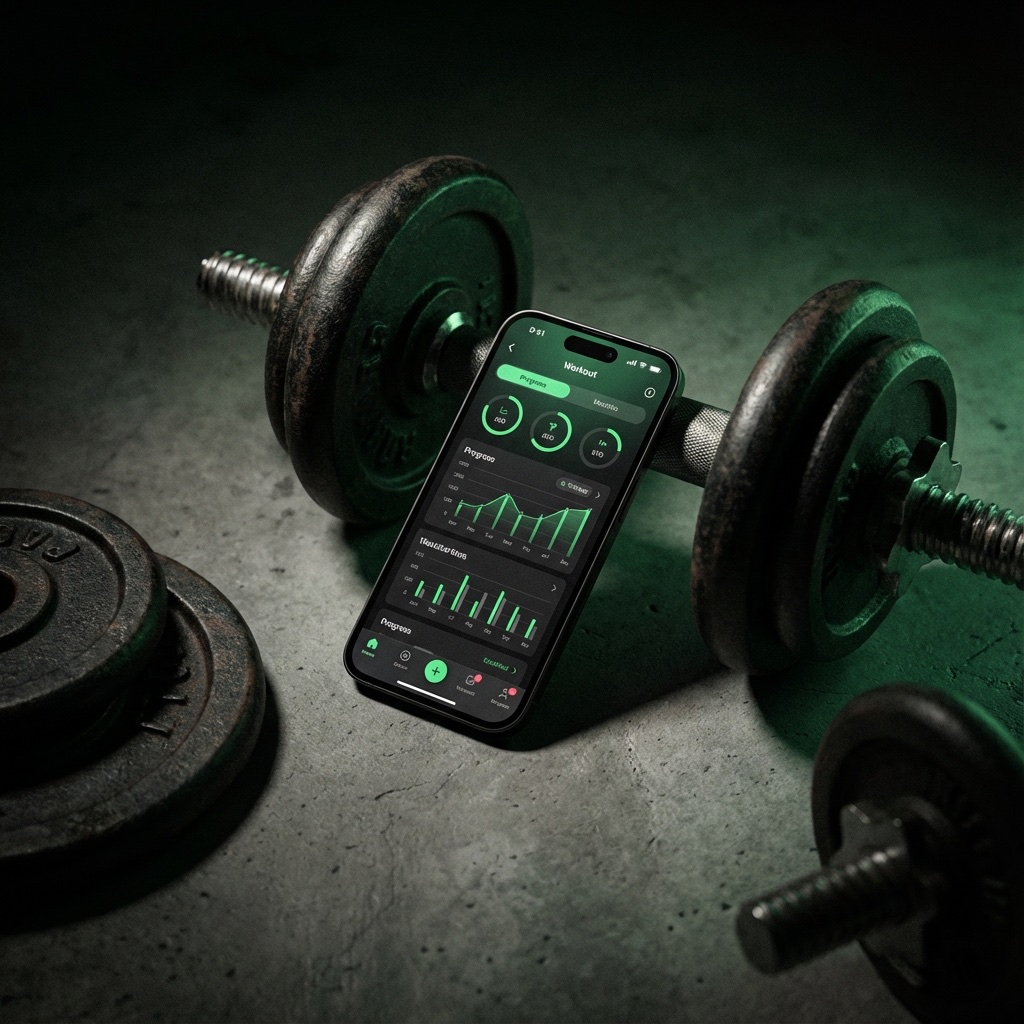
That is the principle behind Gainz: see what to beat, log fast, and get back to lifting—with a minimal iPhone interface, offline-first workout logging, and Apple Watch support.
Take Gainz through one real workout.
See your last result, log the next set, and keep your focus on lifting.
iOS 17+ · Offline workout logging