
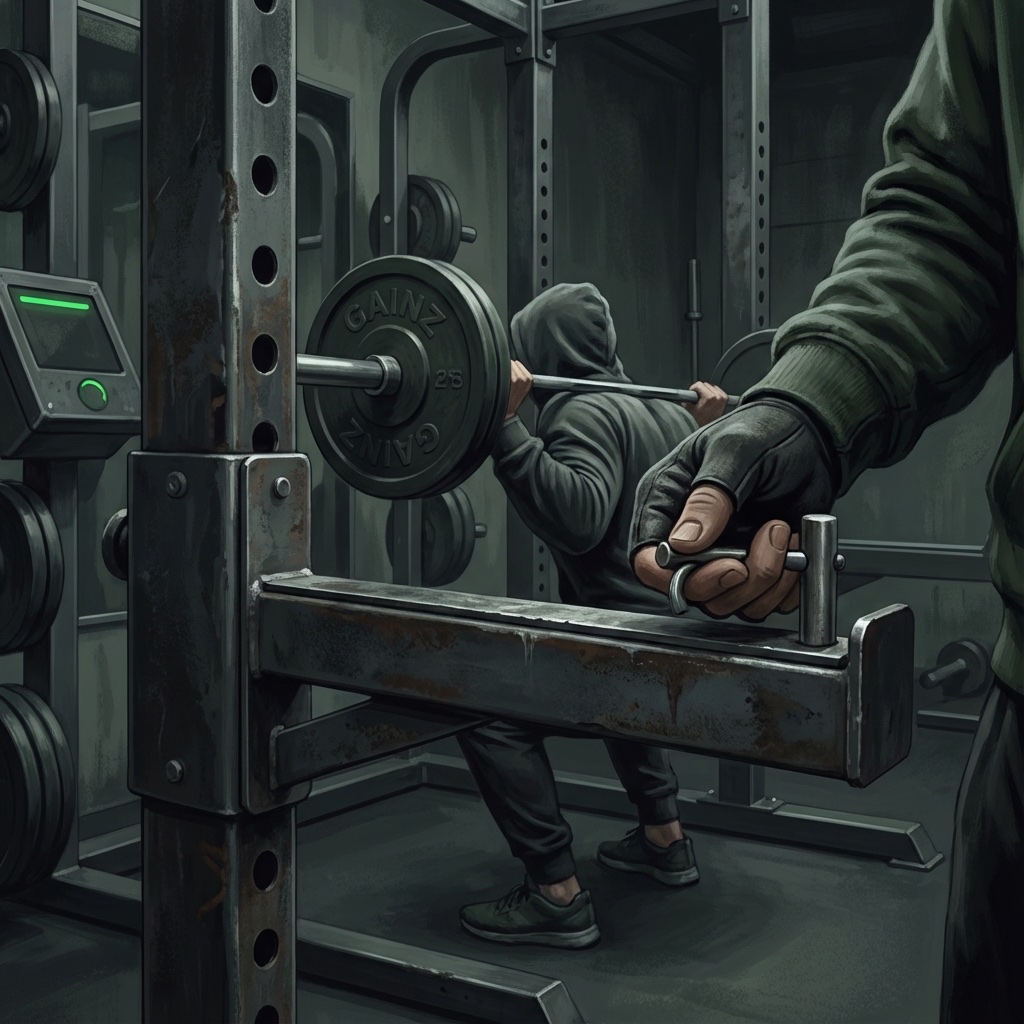
Most serious lifters train solo at least some of the time. Without a spotter, gym safety becomes your responsibility. Here's how to train hard—and train smart—when you're on your own.
General Principles
- Know Your Limits — No one is around to bail you out. Leave 1-2 reps in the tank on risky movements.
- Use Safety Equipment — Squat in a rack with safeties set correctly. Always. Squat form guide.
- Warm Up Properly — Cold muscles are injury-prone. Don't rush into heavy sets.
Exercise-Specific Safety
- Bench Press — Use a power rack with safeties, or learn the "roll of shame." Avoid clips so plates can slide off if needed. Don't attempt true 1RM alone.
- Squats — Set safeties at the bottom of your range. Practice bailing by dumping the bar behind you (in an open area). Fix common squat issues.
- Deadlifts — Safer solo since you can just drop the bar. Focus on proper technique to protect your back.
- Overhead Press — Use a rack. If you fail, guide the bar down in front rather than behind.
Environmental Safety
- Keep walkways clear of equipment.
- Re-rack weights properly—rolling dumbbells cause injuries.
- Stay hydrated, especially in hot gyms.
- Know where the emergency exits and first aid kit are.
When to Stop
Stop the session for sharp pain, dizziness, chest pain, fainting, or unusual shortness of breath. Chest pain, severe breathing difficulty, fainting, or symptoms that feel life-threatening may require emergency evaluation—call your local emergency services. Seek prompt medical advice for new or persistent dizziness, pain, or shortness of breath before returning to training. This guide does not replace clinical care.
Medical source
Related: Deadlift Technique | Joint-Conscious Shoulder Training
Log your sessions and stay consistent with Gainz →Make your next workout count.
Log sets fast, track progressive overload, and know what to beat next.
iOS 17+ · Offline workout logging