
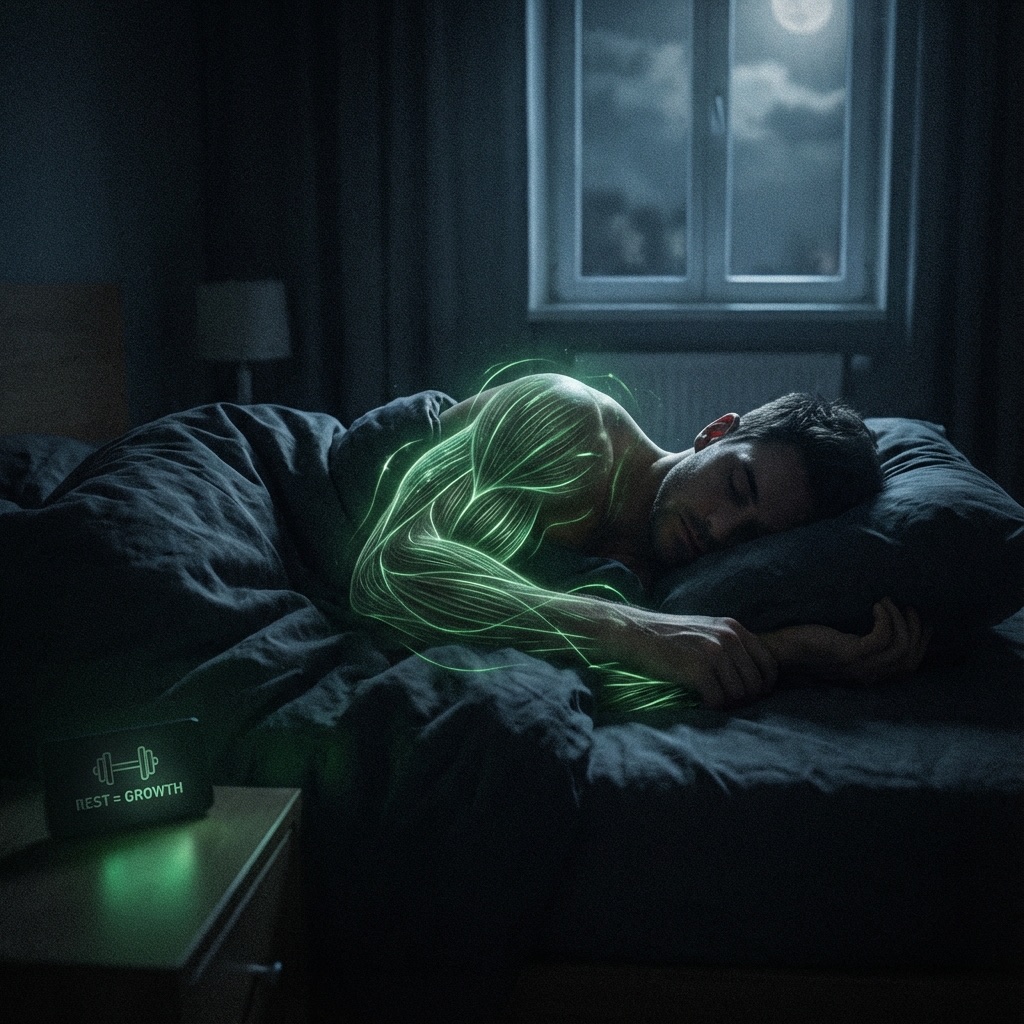
Sleep and Muscle Growth: A Practical Recovery Guide
TL;DR: Too little sleep can reduce training performance and make recovery harder. Aim for a consistent 7–9 hours when your schedule allows.
Why sleep matters
- Short or disrupted sleep can make hard sessions feel more demanding.
- Meta-analyses find that acute sleep loss can reduce physical performance, although the size of the effect varies by task and timing.
Sleep playbook
- Consistent schedule; dark, cool room.
- Avoid substantial caffeine for at least 6 hours before bed; sensitive people may need a longer cutoff.
- Reduce bright light near bedtime and use a repeatable wind-down routine.
Most healthy adults should regularly get at least 7 hours of sleep; individual needs vary, and 7–9 hours is appropriate for many adults. If insomnia, loud snoring, breathing pauses, or persistent daytime sleepiness continues despite good habits, speak with a healthcare professional rather than relying on supplements.
Sources
- Watson NF, et al. Recommended Amount of Sleep for a Healthy Adult: A Joint Consensus Statement of the American Academy of Sleep Medicine and Sleep Research Society. Sleep. 2015;38(6):843–844. Consensus statement (PDF)
- Craven J, et al. Effects of Acute Sleep Loss on Physical Performance: A Systematic and Meta-Analytical Review. Sports Med. 2022;52:2669–2690. PubMed
- Drake C, et al. Caffeine Effects on Sleep Taken 0, 3, or 6 Hours before Going to Bed. J Clin Sleep Med. 2013;9(11):1195–1200. PubMed
- National Heart, Lung, and Blood Institute. Healthy Sleep Habits. NIH
Train with the data
Make your next workout count.
Log sets fast, track progressive overload, and know what to beat next.
Download Gainz
Free to start on iPhone
iOS 17+ · Offline workout logging