
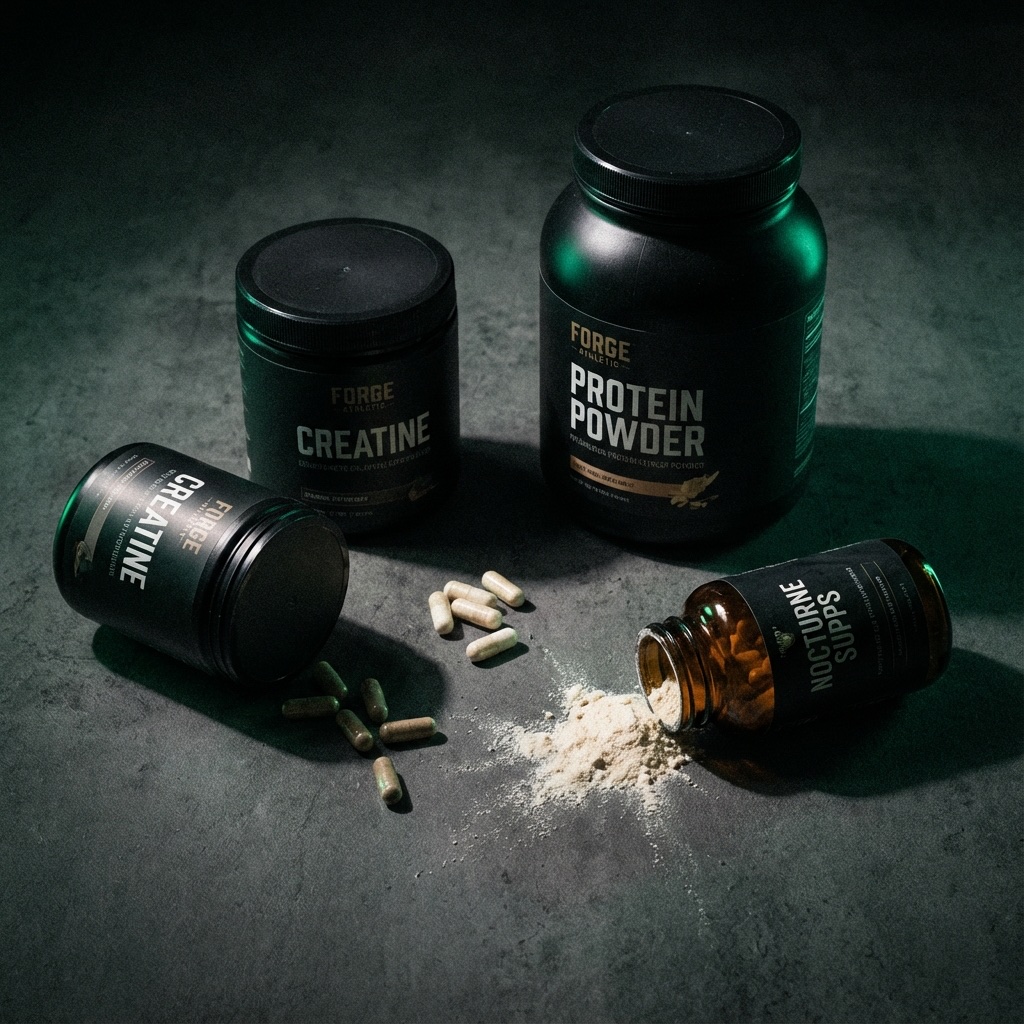
The Truth About Supplements: What Actually Works for Muscle Growth
TL;DR: Creatine monohydrate has strong evidence for repeated high-intensity performance and training adaptations. Protein powder is a convenient food source, not a requirement. Caffeine can help some forms of performance but also causes dose-dependent side effects. Start with food, then judge any supplement by your goal, health, and the quality of evidence.
Worth it
- Creatine monohydrate: A maintenance dose of 3–5g daily is commonly studied and can improve high-intensity exercise capacity and resistance-training adaptations.
- Protein powder: A convenient way to meet an appropriate daily protein target when food alone is impractical.
- Caffeine: Doses around 3–6 mg/kg can improve performance for many—but not all—people. Lower doses may work, while higher doses raise the risk of insomnia, anxiety, palpitations, and other side effects.
Maybe
- Beta-alanine may help repeated high-intensity efforts lasting roughly one to several minutes. Evidence for citrulline products and many multi-ingredient pre-workouts is less consistent.
Skip
- Products built around proprietary blends or sweeping “test booster” and “muscle builder” claims without transparent dosing and credible evidence.
Safety boundary: Supplements can interact with medicines and medical conditions, and the FDA does not approve dietary supplements for safety and effectiveness before sale. Discuss them with a physician or sports dietitian if you are pregnant, under 18, have a health condition, take medication, or compete under anti-doping rules. Prefer products independently tested for identity and contaminants.
Sources
- Kreider RB, et al. International Society of Sports Nutrition position stand: safety and efficacy of creatine supplementation in exercise, sport, and medicine. J Int Soc Sports Nutr. 2017;14:18. PMC
- Guest NS, et al. International society of sports nutrition position stand: caffeine and exercise performance. J Int Soc Sports Nutr. 2021;18:1. PubMed
- Maughan RJ, et al. IOC consensus statement: dietary supplements and the high-performance athlete. Br J Sports Med. 2018;52:439–455. PubMed
- U.S. Food and Drug Administration. FDA 101: Dietary Supplements. FDA
Train with the data
Make your next workout count.
Log sets fast, track progressive overload, and know what to beat next.
Download Gainz
Free to start on iPhone
iOS 17+ · Offline workout logging